Asia Shares Mixed as Wall Street Losses Weigh on Market Sentiment
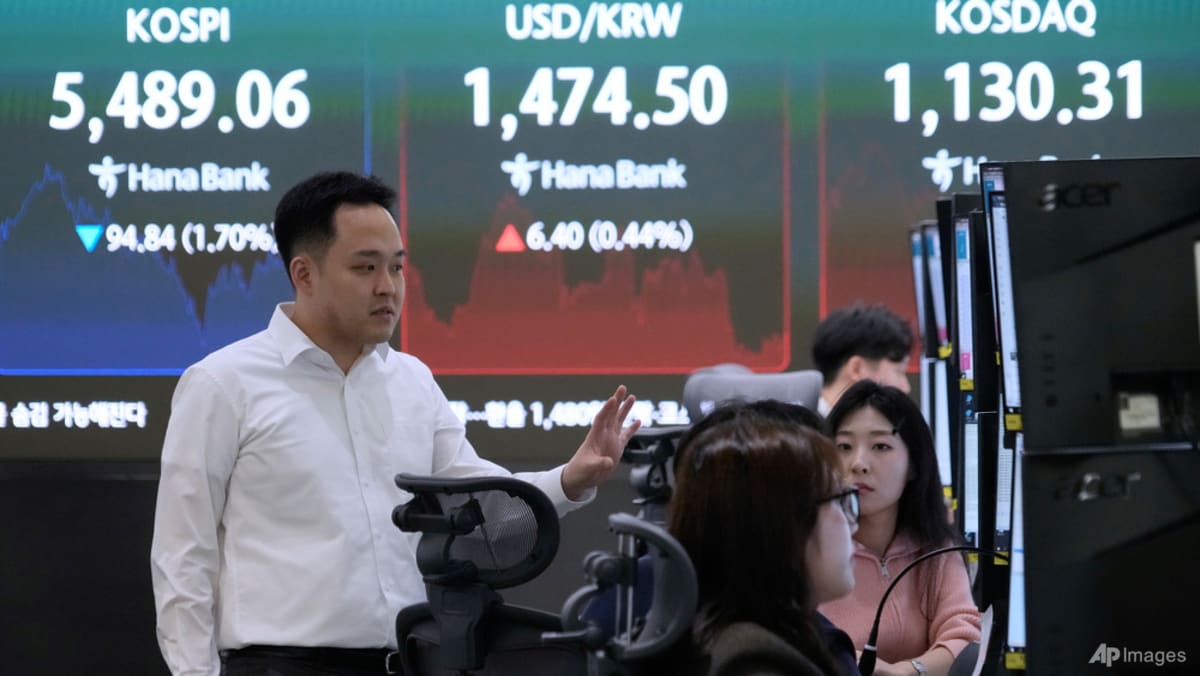
Asian markets displayed a mixed performance following Wall Street's recent downturn, with oil prices also experiencing a decline. Investors remain cautious amid ongoing economic uncertainties and geopolitical tensions.
Asian Markets React to Wall Street's Decline
In the wake of Wall Street's losses, Asian shares opened mixed on Tuesday, reflecting a cautious sentiment among investors grappling with economic uncertainties. The decline in U.S. markets, attributed to concerns over rising interest rates and inflation, has reverberated across the globe, impacting trading in Asia.
Wall Street's Impact on Asia
On Monday, the Dow Jones Industrial Average fell by 1.6%, while the S&P 500 and Nasdaq Composite dropped by 1.3% and 1.1%, respectively. The downturn was driven by fears that the Federal Reserve's aggressive stance on interest rates could stifle economic growth. As a result, Asian investors are closely monitoring the situation, with many adopting a wait-and-see approach before making significant moves.
Mixed Performance Across Asian Markets
In Japan, the Nikkei 225 index saw a slight increase of 0.2% in early trading, buoyed by a weaker yen, which benefits exporters. Conversely, Hong Kong's Hang Seng Index opened lower, reflecting ongoing concerns about the impact of a slowing Chinese economy and regulatory pressures on technology companies.
Meanwhile, South Korea's Kospi index experienced a modest decline of 0.3%, while Australia's ASX 200 managed to gain 0.5% as commodity prices showed signs of stabilization. These mixed results highlight the divergent economic conditions across the region, as investors weigh local factors against the backdrop of global market trends.
Oil Prices and Economic Outlook
Oil prices have also taken a hit, with Brent crude futures falling by 1.2% to $83.50 a barrel, while West Texas Intermediate (WTI) dropped by 1.5% to $78.00. The decline in oil prices is attributed to concerns over demand amid a potential global economic slowdown, further complicating the outlook for Asian economies that are heavily reliant on energy exports.
Analysts suggest that the recent fluctuations in oil prices could have a significant impact on inflation rates, which are already a concern for many countries in the region. As energy costs rise, consumers and businesses alike may face increased financial pressures, potentially leading to reduced spending and slower economic growth.
Geopolitical Tensions and Investor Sentiment
Adding to the uncertainty are ongoing geopolitical tensions, particularly between the U.S. and China. The trade relationship between the two economic giants remains strained, with recent developments suggesting that further escalation could be on the horizon. Investors are wary of how these tensions could affect trade flows and economic stability in the Asia-Pacific region.
In this context, many analysts are advising caution, emphasizing the need for investors to remain vigilant and adaptable in the face of rapidly changing market conditions. With earnings season approaching, companies will soon report their financial results, which could provide further insights into the health of the economy and influence market sentiment moving forward.
Conclusion
As Asian markets navigate the complexities of a mixed global landscape, investors are urged to stay informed and consider both local and international factors that could impact their portfolios. The interplay between Wall Street's performance, oil prices, and geopolitical developments will continue to shape the trading environment in the coming days.