China Launches Rocket for Year-Long Space Mission as 2030 Moon Landing Plans Advance
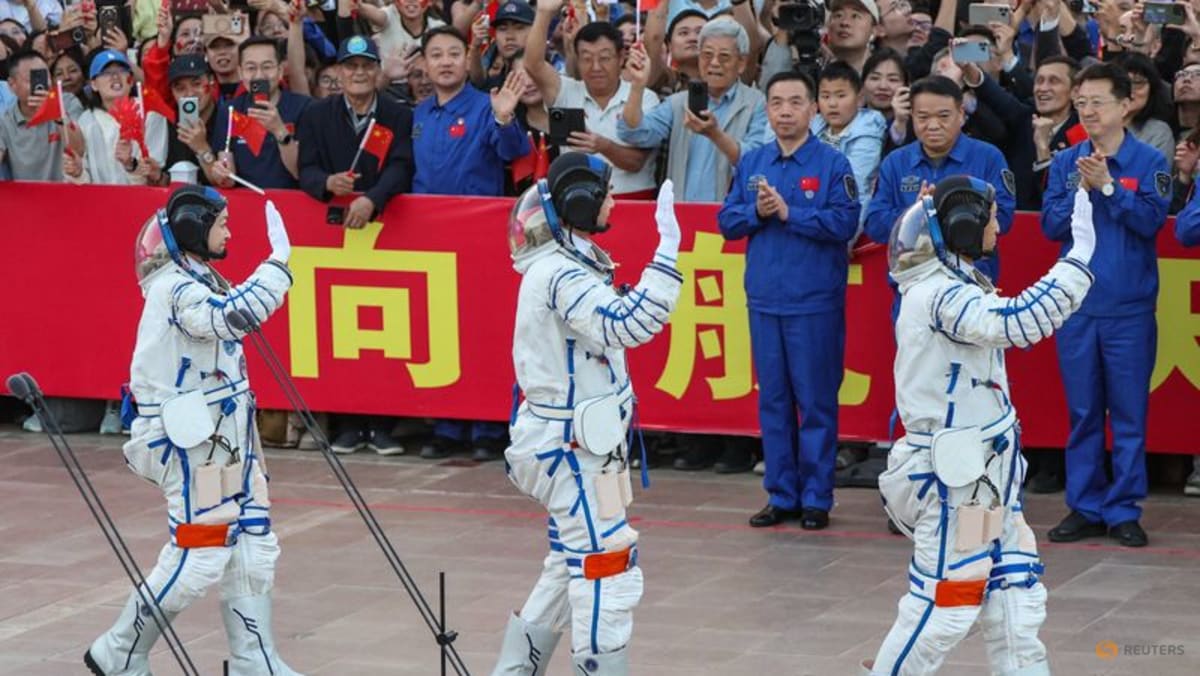
China has successfully launched a rocket carrying an astronaut for a year-long space mission, marking a significant milestone in its ambitious space exploration agenda. This mission is part of China's broader strategy to achieve a manned moon landing by 2030.
China's Ambitious Space Program Takes Flight
In a landmark achievement for its space exploration agenda, China has launched a rocket carrying an astronaut on a year-long mission to the Tiangong space station. This mission, which is part of a broader strategy aimed at achieving a manned moon landing by 2030, underscores China's commitment to becoming a leading player in the global space race.
The Launch and Mission Details
The Long March 2F rocket lifted off from the Jiuquan Satellite Launch Center in the Gobi Desert, successfully placing the Shenzhou-16 spacecraft into orbit. The mission is expected to last approximately 365 days, during which the astronaut will conduct a series of scientific experiments and technology demonstrations aboard the Tiangong space station.
Significance of the Mission
This mission is not just a routine spaceflight; it represents a significant step forward in China's long-term vision for space exploration. The year-long duration is particularly noteworthy, as it will allow Chinese astronauts to gain invaluable experience in living and working in space for extended periods. This experience is crucial for future missions, including those targeting the moon and beyond.
China's Space Ambitions
China's space program has gained momentum in recent years, with a series of successful missions that have included the landing of the Chang'e 5 lunar probe and the construction of the Tiangong space station. The country aims to solidify its position as a global leader in space exploration, with plans to send astronauts to the moon by 2030 and potentially establish a permanent lunar base thereafter.
International Reactions
The international community has been closely monitoring China's advancements in space technology. While some nations view China's space ambitions with apprehension, others recognize the potential for collaboration in scientific research and exploration. The successful launch of Shenzhou-16 may serve as a catalyst for renewed discussions on international cooperation in space.
Future Prospects
As China continues to push the boundaries of space exploration, the implications of its advancements are far-reaching. The successful execution of the year-long mission will not only enhance China's capabilities in space but also pave the way for future endeavors, including Mars exploration and beyond. With the 2030 moon landing goal firmly in sight, China's space program is poised to enter a new era of discovery and innovation.
Conclusion
The launch of the Shenzhou-16 spacecraft marks a significant milestone in China's space exploration efforts. As the nation prepares for a manned moon landing and continues to develop its space station, the world watches closely, anticipating the next chapter in the story of human space exploration.