China Launches Shenzhou 23 Spacecraft for Yearlong Mission
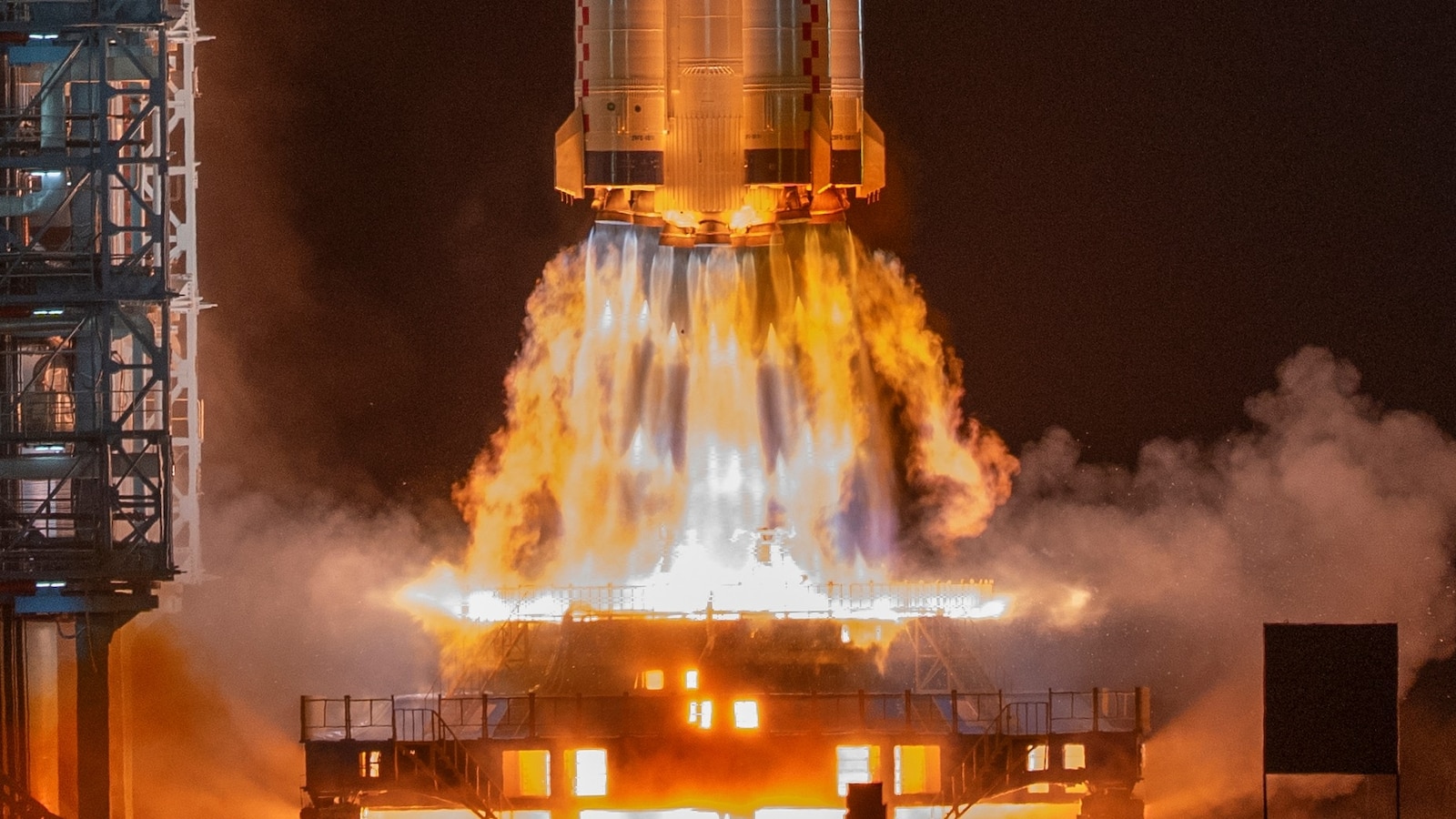
China has successfully launched the Shenzhou 23 spacecraft, marking a significant step in its space exploration efforts. The mission will see one of three astronauts embark on a yearlong stay in orbit, furthering China's ambitions in space.
China's Ambitious Space Mission Takes Off
In a significant advancement for its space exploration program, China launched the Shenzhou 23 spacecraft on Thursday, sending three astronauts into orbit. This mission is notable not only for its scale but also for the extended duration of one of the astronauts' stays in space, which is set to last for an entire year. This launch is part of China's broader strategy to establish a permanent human presence in space and conduct extensive research in low Earth orbit.
Mission Details and Objectives
The Shenzhou 23 mission aims to bolster China's capabilities in space technology and research. The spacecraft was launched from the Jiuquan Satellite Launch Center in the Gobi Desert, a site that has become synonymous with China's growing prowess in space exploration. The crew includes three astronauts, with one of them, designated for a yearlong stay aboard the Tiangong space station, which is currently under construction.
Significance of the Yearlong Stay
The yearlong mission is particularly significant as it will provide invaluable data on the effects of long-duration spaceflight on the human body. As China aims to establish a fully operational space station by 2022, understanding the physiological and psychological challenges faced by astronauts during extended missions is crucial. The insights gained from this mission will not only aid in the development of the Tiangong space station but also contribute to future missions to the Moon and beyond.
China's Space Program: A Growing Force
China's space program has made remarkable strides in recent years, with successful missions including the Chang'e lunar exploration program and the Tianwen-1 Mars mission. The Shenzhou 23 mission is a continuation of this momentum, showcasing China's commitment to becoming a leading player in space exploration. The successful launch of the spacecraft reflects the country's technological advancements and its ambitions to compete with established space powers like the United States and Russia.
International Reactions and Future Prospects
The international community has taken note of China's rapid advancements in space technology. While some countries express concern over the potential militarization of space, others view China's efforts as a positive contribution to global scientific knowledge. As China continues to develop its capabilities, the prospect of international collaboration in space exploration becomes increasingly likely, paving the way for joint missions and shared research initiatives.
Conclusion
The launch of the Shenzhou 23 spacecraft marks a pivotal moment in China's space exploration endeavors. With a yearlong mission ahead, the astronauts will not only contribute to the scientific understanding of long-duration spaceflight but also solidify China's position as a formidable force in the realm of space exploration. As the world watches closely, the outcomes of this mission could have far-reaching implications for the future of human space travel.