China's AI Surge: Closing the Gap with the U.S. Amidst Talent Migration Challenges
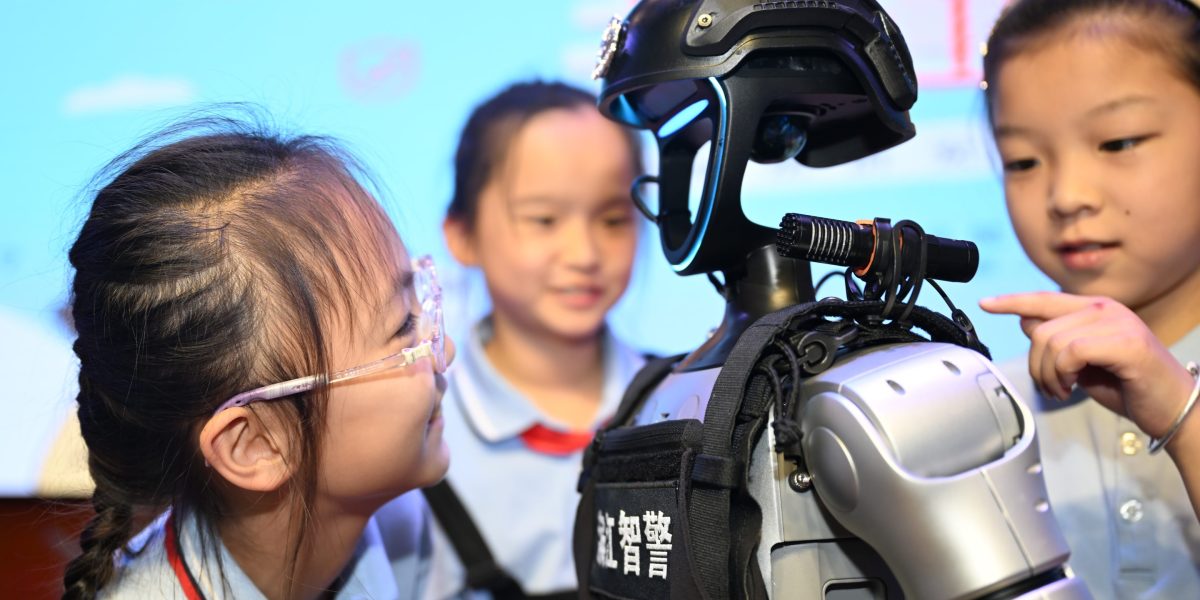
A recent Stanford report reveals that China has significantly narrowed the technological gap with the United States in artificial intelligence. This shift is compounded by a slowdown in the migration of tech experts to the U.S., raising questions about the future of global AI leadership.
Introduction
In a rapidly evolving technological landscape, a recent report from Stanford University has highlighted a significant shift in the global artificial intelligence (AI) arena. China has 'nearly erased' the United States' lead in AI, marking a pivotal moment in the ongoing competition between the two superpowers. This development is further complicated by a noticeable decline in the flow of tech experts migrating to the U.S., which may have long-term implications for the future of innovation and leadership in AI.
China's AI Advancements
According to the Stanford report, China has made remarkable strides in AI research, development, and application. The country's investments in AI technology have surged, with government backing and a thriving ecosystem of startups and established companies driving innovation. Chinese tech giants like Alibaba, Tencent, and Baidu have become major players in the AI field, developing cutting-edge technologies that rival their American counterparts.
The report indicates that China's advancements are not merely quantitative but also qualitative. Chinese researchers are publishing a growing number of high-impact papers in AI, and the country is increasingly seen as a leader in certain AI subfields, such as natural language processing and computer vision. This shift poses a significant challenge to the U.S., which has long been regarded as the global leader in AI.
Talent Migration Trends
One of the critical factors that have historically fueled the U.S. dominance in technology has been its ability to attract top talent from around the world. However, the Stanford report notes a concerning trend: the flow of tech experts moving to the U.S. is slowing to a trickle. This decline can be attributed to several factors, including stricter immigration policies, rising anti-immigrant sentiments, and the increasing allure of opportunities in China.
As China's tech ecosystem matures, it is becoming an attractive destination for skilled professionals. The country's rapid economic growth, coupled with significant investments in research and development, has created a vibrant job market for tech experts. Many are now choosing to stay in China or return home after studying abroad, drawn by the promise of exciting career prospects and the chance to contribute to a burgeoning industry.
The Implications of Slowed Migration
The slowdown in talent migration to the U.S. raises important questions about the future of American innovation. With fewer skilled workers entering the country, the U.S. risks falling behind in the global race for AI supremacy. This could have far-reaching consequences, impacting everything from economic growth to national security.
Moreover, as China continues to invest heavily in AI, the potential for collaboration between the two countries may diminish. The U.S. has historically benefited from the exchange of ideas and talent across borders, but increasing geopolitical tensions could further isolate American researchers and companies from their Chinese counterparts.
Conclusion
The findings of the Stanford report underscore a critical juncture in the global AI landscape. With China rapidly closing the gap with the U.S. and the flow of tech talent shifting, the dynamics of innovation are changing. Policymakers in the U.S. must address these challenges to maintain their competitive edge in AI and ensure that the country remains a leader in technological advancement.
As the competition heats up, the world watches closely to see how these developments will shape the future of AI and the broader technological landscape.