China's Trade Dynamics Shift Amid Ongoing Iran Conflict
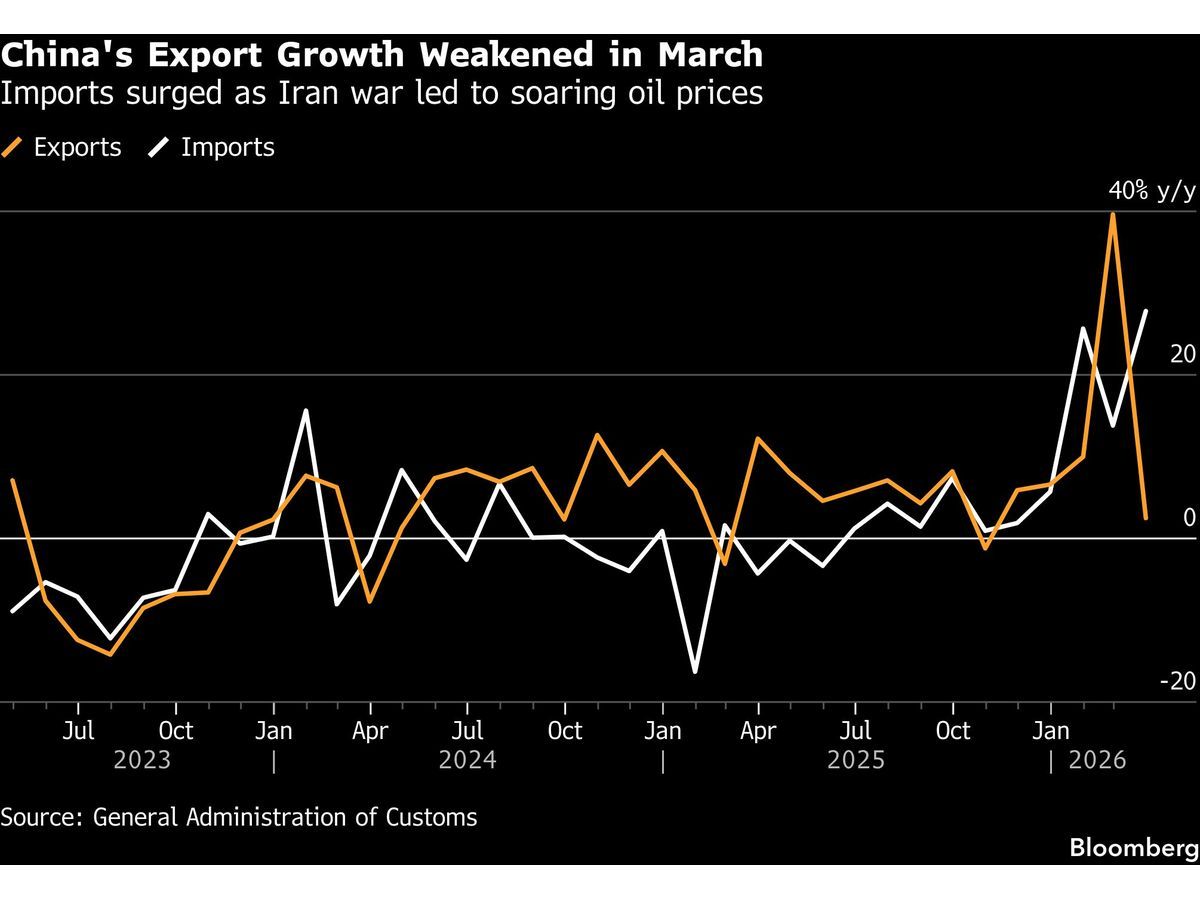
China's exports have faced a significant decline while imports have surged in the wake of the first month of the Iran war. This shift in trade dynamics raises concerns about the broader implications for the Chinese economy and global markets.
China's Trade Dynamics Shift Amid Ongoing Iran Conflict
In a troubling development for the Chinese economy, recent reports indicate that the nation's exports have stumbled significantly while imports have soared in the first month following the outbreak of the Iran war. This unexpected shift in trade dynamics has raised eyebrows among economists and analysts, prompting discussions about the potential long-term implications for China's economic landscape and its role in global markets.
According to data released by the General Administration of Customs, China's exports fell by 14.5% year-on-year in September, marking one of the steepest declines in recent history. This downturn is attributed to a combination of factors, including weakened global demand, ongoing supply chain disruptions, and the escalating geopolitical tensions stemming from the conflict in Iran. Analysts suggest that the war has exacerbated existing economic challenges, particularly for industries heavily reliant on international trade.
On the flip side, imports have surged by 20.5% during the same period, driven primarily by a spike in energy prices and increased demand for raw materials. The war in Iran has led to significant fluctuations in oil prices, which in turn has impacted China's energy sector. As the world's largest importer of crude oil, China has been compelled to secure its energy supply amidst fears of further disruptions in the Middle East.
This dual trend of declining exports and rising imports presents a complex scenario for policymakers in Beijing. The Chinese government has long prioritized export-led growth as a cornerstone of its economic strategy. However, the current situation may necessitate a reevaluation of this approach, particularly as global markets remain volatile and uncertain.
Experts warn that if the conflict in Iran continues to escalate, it could lead to further disruptions in global supply chains, which would disproportionately affect China's manufacturing sector. Many companies are already grappling with the effects of the COVID-19 pandemic, and additional challenges could push some businesses to the brink of collapse.
Furthermore, the trade imbalance created by soaring imports and plummeting exports could have significant ramifications for China's currency, the yuan. A weaker yuan may make imports more expensive, leading to inflationary pressures that could impact consumers and businesses alike. This scenario raises concerns about the potential for economic instability, particularly as China seeks to maintain its growth trajectory in the face of external challenges.
In response to these developments, the Chinese government is likely to implement measures aimed at stabilizing the economy and supporting affected industries. This could include increased investment in domestic production capabilities, as well as efforts to diversify trade partnerships in order to reduce reliance on specific markets.
As the situation in Iran continues to unfold, the ramifications for China's economy and its trade relationships will be closely monitored by analysts and investors alike. The interplay between geopolitical events and economic performance will remain a critical area of focus, as stakeholders seek to navigate the complexities of an increasingly interconnected global landscape.
In conclusion, the first month of the Iran war has brought about significant changes to China's trade dynamics, with exports facing a sharp decline and imports experiencing a notable increase. As the nation grapples with these challenges, the long-term implications for its economy and global trade will undoubtedly be a topic of ongoing discussion and analysis.