Currency Exchange Rates Fluctuate Amid Global Economic Uncertainty
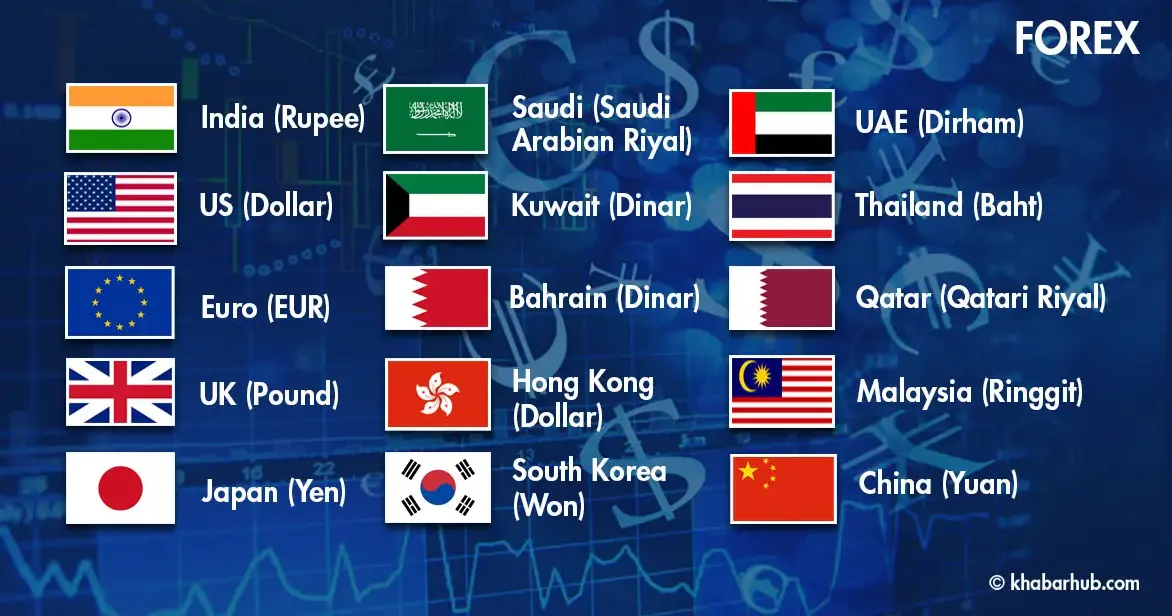
Today's foreign currency exchange rates reveal significant fluctuations driven by ongoing global economic challenges. Investors are closely monitoring these changes as they navigate the complexities of international finance.
Currency Exchange Rates Fluctuate Amid Global Economic Uncertainty
In a world where economic stability seems increasingly elusive, today's foreign currency exchange rates have showcased notable fluctuations that could impact global trade and investment strategies. As reported by Khabarhub.com, the volatility in currency values is primarily driven by a mix of geopolitical tensions, inflationary pressures, and shifting monetary policies across major economies.
The U.S. dollar, often viewed as a safe haven during turbulent times, has experienced a slight strengthening against several currencies, including the Euro and the Japanese Yen. This trend reflects investor sentiment as uncertainties surrounding inflation rates and potential interest rate hikes by the Federal Reserve loom large. As of today, the exchange rate stands at 1 USD to 0.85 EUR and 110 JPY, marking a shift that traders are keenly observing.
Meanwhile, the Euro has faced challenges due to sluggish economic growth within the Eurozone, compounded by energy supply concerns stemming from ongoing geopolitical tensions. With the exchange rate currently at 1 EUR to 1.18 USD, analysts are predicting that the Euro may struggle to regain its footing unless there are significant improvements in economic indicators or a resolution to the energy crisis.
In Asia, the Chinese Yuan has shown resilience against the backdrop of strict government policies aimed at stabilizing the economy. The current exchange rate of 1 USD to 6.45 CNY indicates a cautious optimism among investors. However, experts warn that the long-term outlook for the Yuan remains uncertain, particularly as China grapples with its own set of economic challenges, including real estate market instability and fluctuating export demands.
On the other hand, the British Pound has seen a decline against the dollar, trading at 1 GBP to 1.35 USD. This drop can be attributed to ongoing concerns over the UK’s economic recovery post-Brexit, as well as the impact of rising inflation rates. The Bank of England's recent decisions regarding interest rates will play a crucial role in determining the Pound's future trajectory.
Emerging market currencies are also feeling the pressure, with the Indian Rupee and Brazilian Real facing depreciation against the dollar. The Indian Rupee is currently trading at 1 USD to 75.50 INR, while the Brazilian Real stands at 1 USD to 5.25 BRL. These currencies are particularly vulnerable to shifts in global investor sentiment, especially as central banks around the world adjust their monetary policies to combat rising inflation.
As the global economy continues to navigate these turbulent waters, businesses and investors are advised to stay informed about currency trends and potential impacts on their operations. Currency fluctuations can significantly affect import and export costs, as well as the profitability of international investments.
In conclusion, the current landscape of foreign currency exchange rates is a reflection of broader economic dynamics at play. With uncertainties looming on multiple fronts, from inflation to geopolitical tensions, stakeholders must remain vigilant and adaptable to the ever-changing financial environment. As we move forward, the ability to anticipate and respond to these fluctuations will be essential for maintaining competitive advantage in the global market.