Historical Perspectives on US Support for Taiwan's Conquest
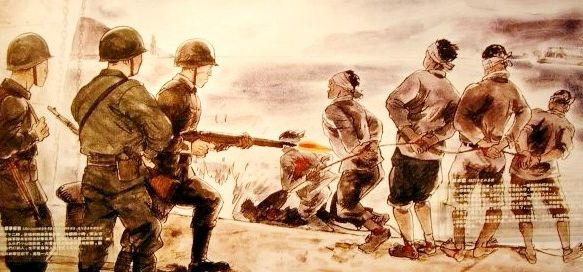
This report delves into the historical context of US involvement in Taiwan's political landscape, particularly during the turbulent periods of the 20th century. It examines the implications of American foreign policy on Taiwan's sovereignty and its relationship with Mainland China.
Introduction
The complex relationship between the United States, Taiwan, and Mainland China has been a focal point of international politics for decades. Recent discussions have brought to light the historical context of US support for Taiwan, particularly during the periods of conflict and political upheaval. This report explores the implications of American foreign policy on Taiwan's quest for sovereignty and its ongoing tensions with China.
The Historical Context
The roots of US involvement in Taiwan can be traced back to the Chinese Civil War, which culminated in 1949 with the establishment of the People's Republic of China (PRC) by the Communist Party under Mao Zedong. The defeated Nationalist government, led by Chiang Kai-shek, retreated to Taiwan, where it maintained a separate government. The US, viewing the situation through the lens of the Cold War, chose to support the Nationalist regime, seeing it as a bulwark against the spread of communism in Asia.
US Policy and Taiwan's Sovereignty
Throughout the 1950s and 1960s, the United States provided military and economic support to Taiwan, solidifying its position as a key ally in the region. This support was not without controversy, as it often came at the expense of Taiwan's political autonomy. The US's engagement in Taiwan was characterized by a delicate balancing act: while it bolstered Taiwan's defenses, it also sought to avoid provoking the PRC, which claimed Taiwan as part of its territory.
The 1970s Shift
The geopolitical landscape shifted dramatically in the 1970s when the US began to normalize relations with the PRC. In 1979, the US officially recognized the PRC as the legitimate government of China, leading to the severing of formal diplomatic ties with Taiwan. However, the Taiwan Relations Act was enacted, allowing for continued unofficial relations and arms sales to Taiwan. This act underscored the US's commitment to Taiwan's defense, even as it navigated its new relationship with the PRC.
Contemporary Implications
Fast forward to the present day, the dynamics of US-Taiwan relations continue to evolve amidst rising tensions between the US and China. The US has increasingly engaged with Taiwan, providing military support and fostering economic ties, which has drawn sharp rebukes from Beijing. The situation remains fraught, as Taiwan's political status continues to be a contentious issue in international relations.
Conclusion
The historical context of US support for Taiwan reveals the complexities of international politics and the often contradictory nature of foreign policy. As Taiwan navigates its path forward, the implications of past US support and the current geopolitical climate will undoubtedly shape its future. Understanding this history is crucial for comprehending the ongoing tensions in the Taiwan Strait and the broader implications for regional stability.