Hong Kong Set to Host Shenzhou-23 Crew in 2027, Featuring Astronaut Lai Ka-ying
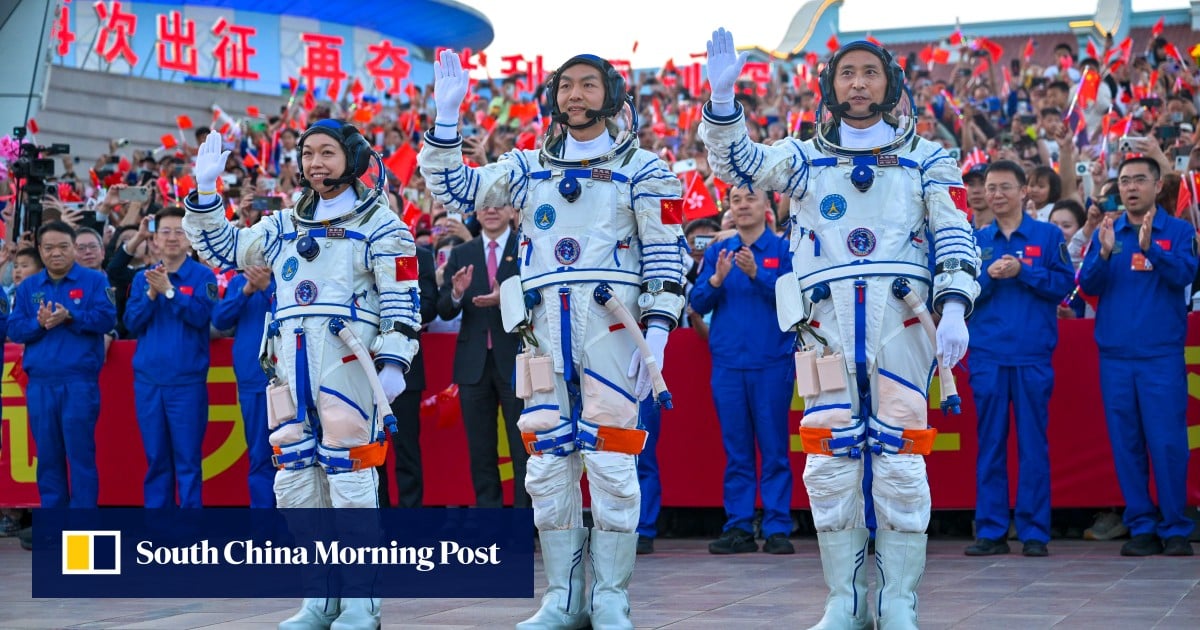
In a groundbreaking announcement, Hong Kong is poised to welcome the Shenzhou-23 crew mission in 2027, which will include renowned astronaut Lai Ka-ying. This event marks a significant milestone for the region's involvement in space exploration and scientific research.
Hong Kong's Space Aspirations Take Flight
In an exciting development for Hong Kong's scientific community and space enthusiasts, the city is set to host the Shenzhou-23 crew mission in 2027. This mission will include the notable astronaut Lai Ka-ying, marking a significant milestone in the region's participation in space exploration. The announcement has generated considerable interest and excitement among the public, highlighting Hong Kong's growing role in the international space arena.
Astronaut Lai Ka-ying: A Trailblazer
Lai Ka-ying, a celebrated figure in the field of astronautics, has made significant contributions to space research and exploration. As one of the first astronauts from Hong Kong, his involvement in the Shenzhou-23 mission is expected to inspire a new generation of scientists and engineers in the region. Lai's journey is a testament to the potential of Hong Kong's talent pool and the importance of investing in science and technology education.
The Shenzhou-23 Mission: An Overview
The Shenzhou-23 mission is part of China's ambitious space program, which aims to establish a permanent presence in low Earth orbit through the construction of the Tiangong space station. The mission will involve a crewed spacecraft that will carry astronauts to the space station for various scientific experiments and research activities. Hosting this mission in Hong Kong not only showcases the city's capabilities but also strengthens its ties with the mainland's space endeavors.
Implications for Hong Kong's Scientific Community
The inclusion of Hong Kong in the Shenzhou-23 mission signifies a pivotal moment for the local scientific community. It opens up new avenues for collaboration between Hong Kong's universities, research institutions, and mainland China's space agencies. This partnership can lead to advancements in various fields, including aerospace engineering, environmental science, and technology, ultimately benefiting the local economy and enhancing Hong Kong's reputation as a hub for innovation.
Public Engagement and Education Initiatives
In anticipation of the Shenzhou-23 mission, local authorities and educational institutions are gearing up to engage the public through various initiatives. Plans are underway to host exhibitions, workshops, and lectures aimed at educating the community about space exploration and the significance of the mission. These initiatives will not only raise awareness but also encourage young people to consider careers in STEM (science, technology, engineering, and mathematics) fields.
Challenges Ahead
While the announcement of the Shenzhou-23 mission is met with enthusiasm, it also presents challenges that need to be addressed. Ensuring the safety and security of the mission, as well as managing public expectations, will require careful planning and coordination between local and mainland authorities. Additionally, fostering a supportive environment for scientific research and development in Hong Kong will be crucial for maximizing the benefits of this historic event.
Conclusion: A New Era for Hong Kong
The hosting of the Shenzhou-23 crew mission in 2027 represents a significant step forward for Hong Kong in the realm of space exploration. With astronaut Lai Ka-ying at the forefront, this mission not only highlights the city's potential but also serves as a catalyst for future scientific endeavors. As Hong Kong embraces this new era, the collaboration with mainland China could pave the way for groundbreaking discoveries and innovations that will resonate far beyond the city's borders.