Innovative CiliaVine Robot Shows Promise in Liver Cancer Diagnosis
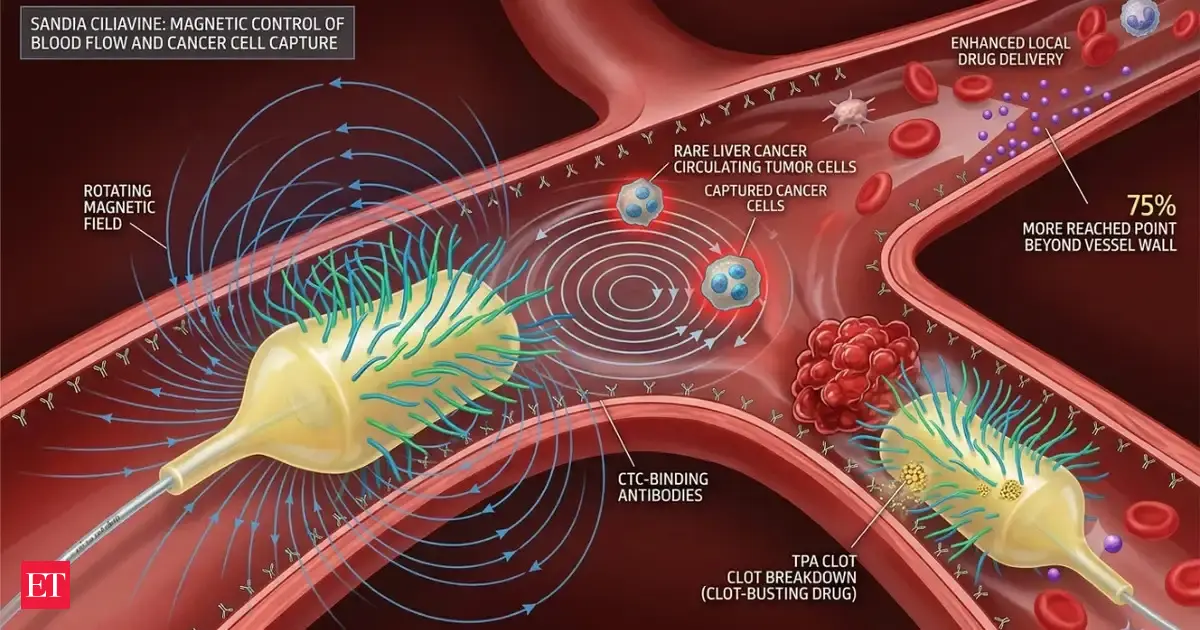
A groundbreaking robotic technology, CiliaVine, developed by researchers in Hong Kong and Mainland China, has successfully captured tumor cells from liver cancer patients. This advancement could revolutionize cancer diagnosis and treatment methodologies.
Revolutionizing Cancer Diagnosis with Robotics
In a remarkable advancement in medical technology, researchers from Hong Kong and Mainland China have developed a pioneering robotic system named CiliaVine. This innovative robot, equipped with 50 magnetic cilia, has demonstrated the ability to capture tumor cells from all 23 liver cancer patients tested, marking a significant milestone in the field of cancer diagnosis.
The Technology Behind CiliaVine
CiliaVine employs a unique mechanism that utilizes magnetic cilia to manipulate blood flow, allowing for the precise targeting and extraction of cancerous cells. This technology not only enhances the accuracy of cancer detection but also opens new avenues for non-invasive diagnostic procedures. The researchers believe that this method could potentially reduce the need for more invasive biopsies, which often carry risks and complications.
Clinical Trials and Results
The initial trials conducted on liver cancer patients have yielded promising results. Each of the 23 patients involved in the study had their tumor cells successfully captured by CiliaVine, showcasing the robot's efficacy. These findings have sparked excitement within the medical community, as they suggest that CiliaVine could be a game-changer in the early detection of liver cancer, which is notoriously difficult to diagnose in its initial stages.
Potential Impact on Cancer Treatment
Early diagnosis is crucial in the treatment of cancer, and the introduction of CiliaVine could significantly improve patient outcomes. By facilitating the rapid identification of tumor cells, healthcare providers can initiate treatment plans sooner, potentially leading to better survival rates. The researchers are optimistic that further development and refinement of this technology could also expand its application to other types of cancers.
Collaboration Between Researchers
The successful development of CiliaVine is the result of collaborative efforts between various research institutions in Hong Kong and Mainland China. This partnership highlights the importance of cross-border cooperation in advancing healthcare technologies. The researchers involved are now looking to secure funding for larger clinical trials that could validate their findings and pave the way for commercial applications.
Future Directions
As the project progresses, the team is focused on enhancing the robot's capabilities and ensuring its reliability in clinical settings. They are also exploring the integration of artificial intelligence to further improve the accuracy of tumor cell detection. The potential for CiliaVine to be used in routine screenings for liver cancer could transform how the disease is monitored and treated.
Conclusion
The development of CiliaVine represents a significant leap forward in the fight against cancer. With its ability to accurately capture tumor cells, this robotic technology could not only improve diagnostic processes but also lead to more effective treatment strategies. As the research continues, the medical community remains hopeful that innovations like CiliaVine will play a crucial role in saving lives and enhancing the quality of care for cancer patients.