Standard Chartered to Cut 7,800 Back-Office Jobs by 2030 Amid Automation Shift
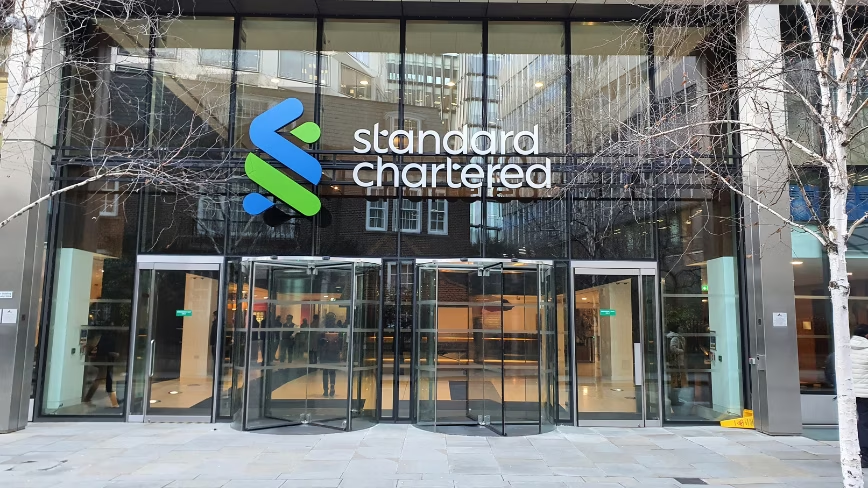
Standard Chartered Bank announces plans to eliminate 7,800 back-office positions by 2030 as part of its transition towards automation and machine learning. The move reflects a broader trend in the banking industry aimed at increasing efficiency and reducing operational costs.
Standard Chartered's Strategic Shift Towards Automation
In a significant move that underscores the ongoing transformation in the banking sector, Standard Chartered Bank has announced plans to cut 7,800 back-office jobs by the year 2030. This decision is part of the bank's strategy to harness the power of automation and machine learning, often referred to as 'the machines', to enhance operational efficiency and reduce costs.
Impact on Employees and the Banking Sector
The decision to streamline its workforce comes as part of a broader trend in the financial services industry, where many banks are increasingly relying on technology to perform tasks traditionally handled by human employees. Standard Chartered's focus on automation is expected to significantly impact its operational model, with many routine functions being performed by advanced algorithms and artificial intelligence systems.
While the bank has not disclosed specific details about which roles will be affected, the cuts are expected to primarily target back-office positions, which include functions such as processing transactions, compliance, and other administrative tasks. This shift raises concerns about job security for thousands of employees, particularly in regions where the bank has a significant presence.
Adapting to a Changing Landscape
Standard Chartered's decision reflects a growing recognition within the banking industry that automation can lead to greater efficiency and cost savings. As financial institutions face increasing pressure to improve their bottom lines and respond to evolving customer expectations, many are investing heavily in technology to streamline operations.
The bank's Chief Executive Officer, Bill Winters, has emphasized the importance of adapting to a rapidly changing landscape. In a recent statement, he noted, "We are committed to investing in technology that enhances our capabilities and enables us to serve our clients better. However, this transformation also means that we must make difficult decisions regarding our workforce."
Broader Industry Trends
This move by Standard Chartered is not an isolated incident. Other major banks around the world have also announced similar plans to reduce their workforce in favor of automation. For instance, JPMorgan Chase and Bank of America have both implemented strategies aimed at integrating technology into their operations, leading to job reductions in certain areas.
Industry experts suggest that while automation may lead to job losses in the short term, it could also create new opportunities in the long run. As banks adopt more sophisticated technologies, there will likely be a growing demand for skilled workers who can manage and maintain these systems. This shift may necessitate a re-skilling of the workforce to prepare employees for new roles in a tech-driven environment.
Conclusion
As Standard Chartered moves forward with its plans to cut 7,800 back-office jobs by 2030, the implications of this decision will be felt across the banking industry. The transition towards automation is indicative of a larger trend that is reshaping the financial services landscape, raising questions about the future of work and the role of technology in everyday banking operations.
While the bank seeks to position itself for future success, it must also navigate the challenges that come with such a significant workforce reduction. The balance between technological advancement and employee welfare will be critical as Standard Chartered embarks on this new chapter.