Taiwan: The Unseen Tension Between the US and China
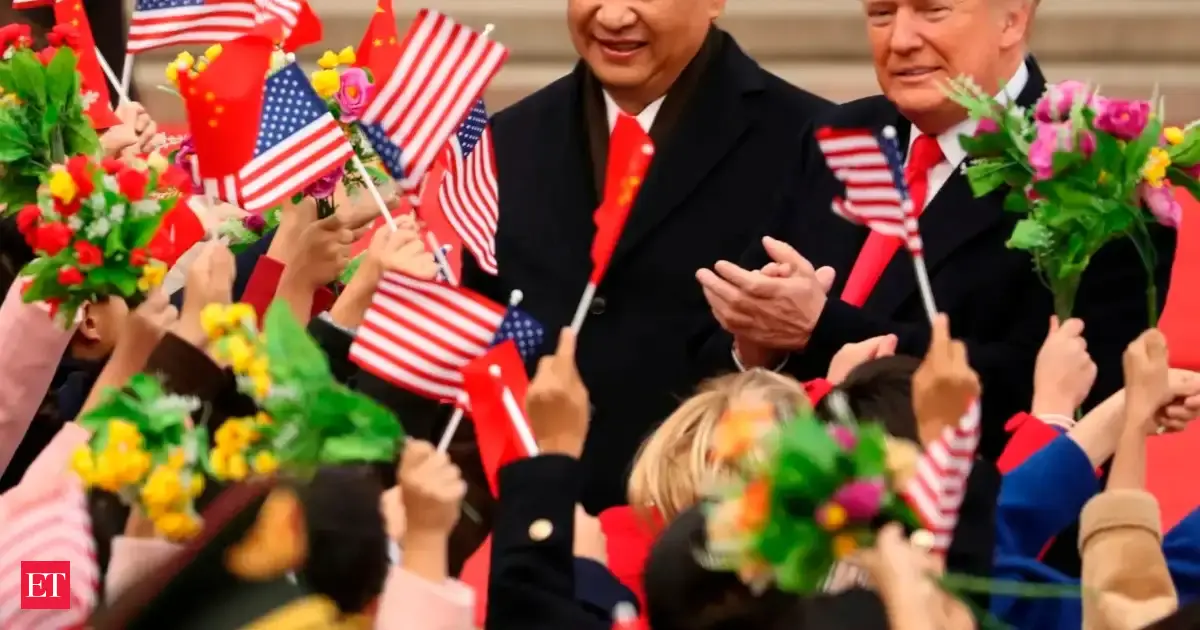
The geopolitical landscape surrounding Taiwan has become increasingly complex, with the island at the center of US-China relations. As tensions rise, the implications for global stability are profound.
Introduction
In the intricate tapestry of international relations, Taiwan stands out as a pivotal point of contention between the United States and China. The island, which has a vibrant democracy and a robust economy, is viewed by Beijing as a breakaway province, while Washington sees it as a crucial ally in maintaining a balance of power in the Asia-Pacific region.
The Historical Context
The roots of the Taiwan issue trace back to the Chinese Civil War, which ended in 1949. The defeated Nationalist government retreated to Taiwan, establishing a separate administration. Since then, Taiwan has developed its own identity, but China has consistently asserted its claim over the island, leading to a complex relationship marked by periods of tension and tentative dialogue.
US Involvement
The United States has played a significant role in Taiwan's defense and international standing. The Taiwan Relations Act, enacted in 1979, commits the US to provide Taiwan with the means to defend itself, a policy that has been a cornerstone of US-China relations. However, as China's military capabilities grow, the US has been increasingly vocal about its support for Taiwan, which has raised the stakes in an already volatile situation.
China's Stance
China's government has taken a hardline approach towards Taiwan, emphasizing its desire for reunification. Recent military exercises near the island and aggressive rhetoric from Chinese officials have heightened fears of a potential conflict. The Chinese Communist Party views any support for Taiwan from the US as a direct challenge to its sovereignty, further complicating diplomatic efforts.
Global Implications
The Taiwan issue is not just a bilateral concern; it has far-reaching implications for global stability. As tensions escalate, other nations are being drawn into the fray. Countries in the Asia-Pacific region, particularly Japan and Australia, are closely monitoring the situation, recognizing that a conflict over Taiwan could disrupt trade routes and regional security.
Economic Factors
Economically, Taiwan is a powerhouse in the semiconductor industry, producing a significant portion of the world's chips. This has made the island even more critical to global supply chains, especially in the tech sector. The US and its allies are increasingly aware that any disruption in Taiwan could have catastrophic effects on the global economy, further incentivizing them to support the island.
Public Sentiment in Taiwan
Public opinion in Taiwan is complex and evolving. While many citizens identify as Taiwanese rather than Chinese, there is a spectrum of views regarding independence and relations with China. The younger generation, in particular, tends to favor a distinct Taiwanese identity, which poses challenges for any potential reconciliation with Beijing.
Conclusion
As Taiwan remains the elephant in the room in US-China relations, the stakes continue to rise. The international community must navigate this delicate situation with caution, recognizing that the future of Taiwan could shape the geopolitical landscape for decades to come. The question remains: will diplomacy prevail, or will the tensions lead to a confrontation that could have devastating consequences for the region and the world?