Taiwan Welcomes Potential Trump Meeting with President Tsai Ing-wen
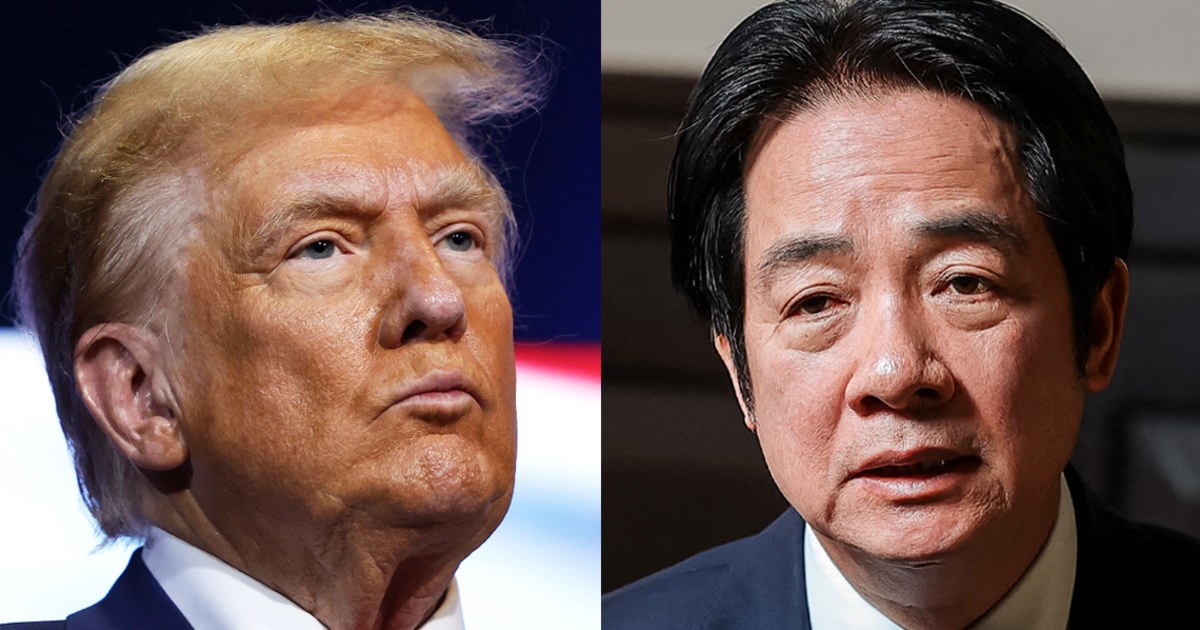
Taiwan expresses enthusiasm over the possibility of former U.S. President Donald Trump engaging in dialogue with its leader, Tsai Ing-wen. This development marks a significant deviation from established diplomatic protocol between the U.S. and Taiwan.
Taiwan's Diplomatic Landscape Shifts
In a noteworthy development in international relations, Taiwan has expressed its welcome for the idea of former U.S. President Donald Trump potentially engaging in discussions with President Tsai Ing-wen. This proposed meeting would represent a significant break from the long-standing diplomatic protocols that have governed U.S.-Taiwan relations since the United States recognized the People's Republic of China (PRC) in 1979.
A Break from Tradition
Traditionally, U.S. presidents have refrained from formal interactions with Taiwanese leaders to avoid upsetting the delicate balance of relations with Beijing. However, with Trump's presidency marked by a more assertive stance towards China, the prospect of a meeting with Tsai could signal a shift in how Taiwan is treated on the global stage.
Trump's Influence on Taiwan Relations
During his presidency, Trump took several steps that were seen as supportive of Taiwan, including arms sales and high-profile visits by U.S. officials to the island. His administration's approach to Taiwan was characterized by a willingness to challenge the status quo and push back against Chinese influence in the region. The potential for a meeting between Trump and Tsai has sparked discussions among political analysts regarding the implications for cross-strait relations and U.S.-China dynamics.
Reactions from Taiwan
The Taiwanese government has responded positively to the idea of Trump meeting with Tsai, viewing it as an opportunity to strengthen ties with the United States. A spokesperson for the Taiwanese Ministry of Foreign Affairs stated, "We welcome any dialogue that enhances our relationship with the U.S. and underscores Taiwan's importance in the region." This sentiment reflects a broader strategy by Taiwan to solidify its international alliances amid increasing pressure from China.
China's Potential Reaction
China, which considers Taiwan a breakaway province, has historically reacted strongly to any perceived slights against its sovereignty. A meeting between Trump and Tsai could provoke a sharp response from Beijing, which has made it clear that it views such interactions as a challenge to its claims over Taiwan. Analysts predict that the Chinese government may issue stern warnings or take diplomatic measures in response to any formal engagement between the two leaders.
The Broader Context of U.S.-China Relations
The potential meeting comes at a time of heightened tensions between the United States and China, with issues ranging from trade disputes to military posturing in the South China Sea. The Biden administration has continued many of Trump's policies regarding China, emphasizing the importance of Taiwan as a democratic ally in the Indo-Pacific region. As such, Trump's willingness to engage with Tsai could be seen as a continuation of a broader trend of U.S. support for Taiwan.
Implications for the Future
As Taiwan navigates its relationship with both the U.S. and China, the prospect of a meeting between Trump and Tsai raises significant questions about the future of cross-strait relations. While such a meeting could bolster Taiwan's international standing, it also risks exacerbating tensions with Beijing. The situation remains fluid, and the global community will be watching closely to see how this potential engagement unfolds.
Conclusion
The idea of Donald Trump meeting with President Tsai Ing-wen represents a pivotal moment in Taiwan's quest for international recognition and support. As Taiwan continues to assert its identity and sovereignty on the world stage, the response from both the U.S. and China will undoubtedly shape the future of the region's geopolitical landscape.