Trump Issues Warning Against Taiwan Independence Following China Visit
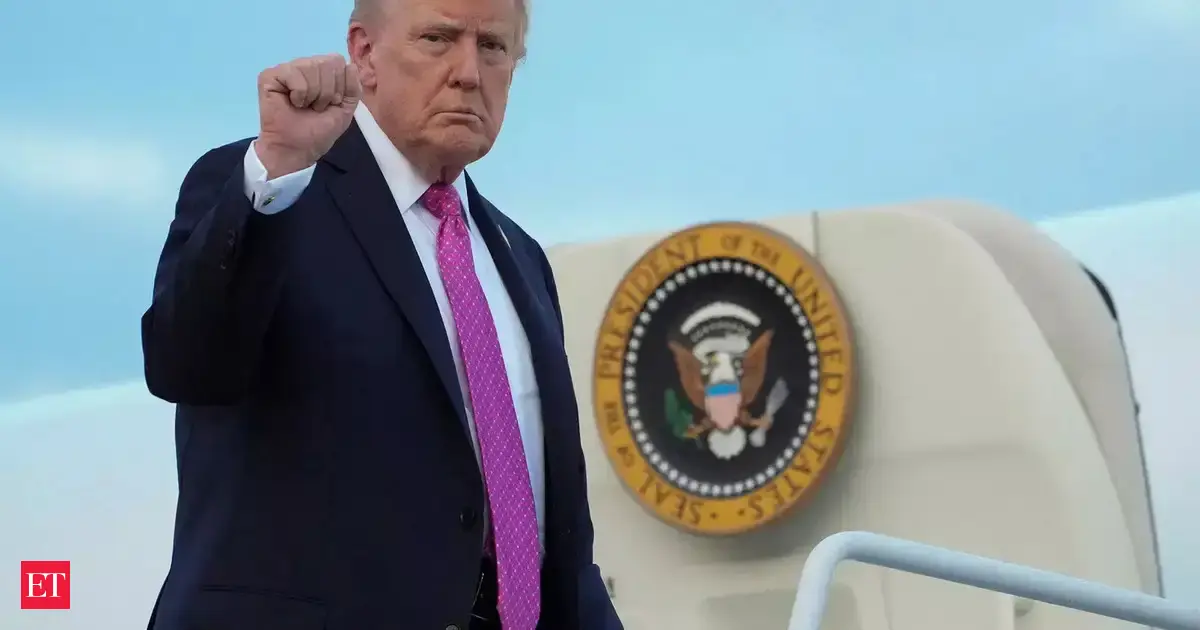
Former President Donald Trump has cautioned against Taiwan's push for independence during a recent visit to China. His comments highlight ongoing tensions in the region and the complex relationship between the United States, China, and Taiwan.
Trump's Visit to China and Its Implications
In a significant political statement, former President Donald Trump has warned against Taiwan's independence, emphasizing the potential repercussions of such a move during his recent visit to China. Trump's remarks come at a time of heightened tensions in the Taiwan Strait, where the relationship between China and Taiwan remains fraught with challenges.
Context of Trump's Warning
During his visit, Trump engaged in discussions with Chinese officials, where the topic of Taiwan's political status was a focal point. The former president reiterated the United States' longstanding policy of supporting a 'One China' principle, which acknowledges Beijing's claim over Taiwan while allowing for unofficial relations with Taipei. Trump's warning serves as a reminder of the delicate balance the U.S. must maintain in its foreign policy concerning China and Taiwan.
China's Stance on Taiwan
China views Taiwan as a breakaway province that must eventually be reunited with the mainland, by force if necessary. In recent years, Beijing has ramped up military exercises near Taiwan, signaling its growing impatience with what it perceives as Taiwan's drift toward independence. Trump's comments may be seen as an attempt to reaffirm U.S. support for Taiwan while also acknowledging China's position, a balancing act that has become increasingly complex in the current geopolitical climate.
Reactions from Taiwan and the U.S.
In response to Trump's statements, Taiwanese officials have expressed concern over the implications of his warning. Taiwan's government has consistently maintained that it is a sovereign state and has rejected any notion of being a part of China. The Taiwanese leadership is keenly aware of the delicate nature of its relationship with both the U.S. and China, and Trump's comments may complicate these dynamics further.
Meanwhile, reactions in the U.S. have been mixed. Some political analysts argue that Trump's warning could undermine Taiwan's position in the international community, while others believe it reinforces the need for a strong stance against Chinese aggression. The Biden administration has also been navigating this complex issue, seeking to bolster support for Taiwan while managing relations with China.
The Broader International Implications
Trump's warning against Taiwan independence is not just a regional issue; it has significant international implications. The U.S. has a vested interest in maintaining stability in the Asia-Pacific region, and any moves toward Taiwanese independence could provoke a military response from China, potentially drawing in the U.S. and its allies.
Moreover, the situation in Taiwan is closely watched by other nations in the region, including Japan and South Korea, who are also concerned about China's growing assertiveness. The international community remains on high alert as the possibility of conflict in the Taiwan Strait looms larger.
Conclusion
As tensions continue to escalate in the region, Trump's warning serves as a stark reminder of the complexities surrounding Taiwan's status and the international ramifications of its pursuit of independence. The interplay between the U.S., China, and Taiwan remains a critical issue that will shape the geopolitical landscape for years to come.