US Restores Trade Privileges for Hong Kong in Diplomatic Shift
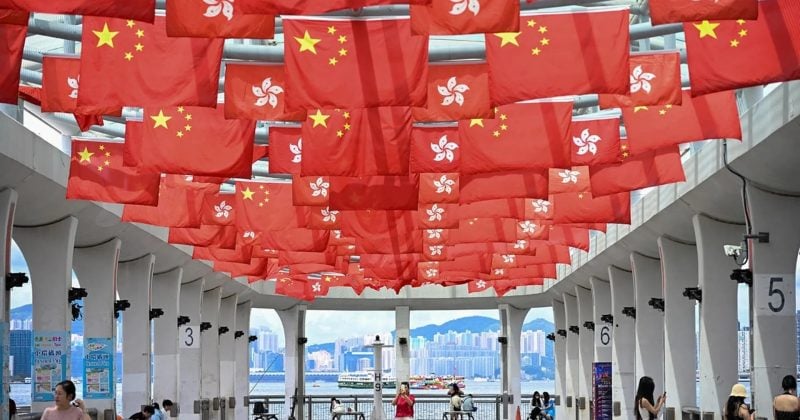
In a significant diplomatic move, the United States has allowed the expiration of Trump-era sanctions against Hong Kong, restoring its trade privileges. This decision marks a pivotal change in U.S.-Hong Kong relations amid ongoing geopolitical tensions.
US Lets Trump-Era Hong Kong Sanctions Order Lapse
In a notable shift in international relations, the United States has allowed the Trump-era sanctions against Hong Kong to lapse, effectively restoring the territory's trade privileges. This decision, announced by the Biden administration, signals a significant change in the U.S. approach to Hong Kong amid the ongoing geopolitical tensions between the U.S. and China.
Background of the Sanctions
The sanctions were initially imposed in response to the Hong Kong government's crackdown on pro-democracy protests in 2019, which drew international condemnation. The measures included restrictions on exports of sensitive technologies and imposed visa bans on certain Hong Kong officials. The sanctions aimed to penalize the Hong Kong government for undermining the autonomy promised to the region under the 'One Country, Two Systems' framework.
Implications of the Lapse
The expiration of these sanctions marks a significant diplomatic shift, suggesting a potential thaw in U.S.-Hong Kong relations. Analysts believe that this move could foster a more constructive dialogue between the U.S. and China, particularly as both nations navigate a complex web of economic and political challenges.
Reactions from Hong Kong and China
Officials in Hong Kong welcomed the decision, viewing it as a recognition of the territory's unique status and its importance as a global financial hub. The Hong Kong government stated that the restoration of trade privileges would enhance the region's economic stability and attractiveness to international investors.
Meanwhile, the Chinese government has also responded positively, interpreting the U.S. decision as a sign of goodwill. Chinese Foreign Ministry spokesperson Mao Ning remarked that the move reflects a growing understanding of the realities in Hong Kong and a recognition of China's sovereignty.
Concerns and Criticism
Despite the positive reactions, some critics argue that the U.S. decision may undermine the global stance against China's human rights violations in Hong Kong. Human rights advocates have expressed concerns that restoring trade privileges could embolden the Hong Kong government to continue its repressive policies against dissenters.
Furthermore, some U.S. lawmakers have voiced their discontent, arguing that the Biden administration is sending mixed signals regarding its commitment to supporting democracy and human rights in Hong Kong. They caution that the decision could be perceived as a retreat from the U.S. stance on promoting democratic values abroad.
The Broader Context
The restoration of trade privileges comes at a time when the U.S. is grappling with various challenges, including economic competition with China and the ongoing fallout from the COVID-19 pandemic. As the U.S. seeks to recalibrate its foreign policy in the Asia-Pacific region, this decision could be seen as an attempt to balance economic interests with the promotion of democratic values.
Moreover, the move may have implications for U.S. relations with Taiwan, as both regions are often viewed through the lens of China's influence in the region. Analysts suggest that the U.S. may be attempting to create a more nuanced approach to its relationships in Asia, one that recognizes the complexities of each situation while still addressing concerns over human rights and democracy.
Conclusion
The expiration of the Trump-era sanctions against Hong Kong marks a significant moment in U.S.-Hong Kong relations, with potential ramifications for broader U.S.-China relations. As the world watches closely, the effectiveness and implications of this diplomatic shift will unfold in the coming months, shaping the future of Hong Kong's role in the global economy and its relationship with both the U.S. and China.